When I first tried to meal prep, I made it way too complicated. I found a recipe that looked amazing, spent three hours cooking it, and ended up with seven identical containers of the same thing that I was sick of by Wednesday. I quit for three months before trying again.
The second time, I used a much simpler approach — a framework instead of following recipes. It's the method I still use, and it works whether you have two hours or twenty minutes.
Here's the five-step method that actually sticks.
Why Most Beginners Quit
Before the steps, it helps to understand why meal prep fails for most people who try it.
Problem 1: They make the same complete meal seven times. Eating the same thing every day gets old fast. By Thursday you're ordering pizza just to feel something.
Problem 2: They pick recipes that are too complex. You don't need to make restaurant-quality dishes to eat well. Complicated recipes create more dishes, more techniques, and more opportunities to mess up.
Problem 3: They buy too much and waste food. Overestimating how many meals you'll actually eat from your prep leads to wasted food and wasted money.
Problem 4: They don't have a system. Without a repeatable process, every week feels like starting from scratch.
The five-step method fixes all four of these problems.
Step 1: Pick One Protein
Choose one protein for the week. Just one. Chicken thighs, ground beef, hard-boiled eggs, tofu, canned tuna — whatever fits your diet and budget.
Cook a batch of it using the simplest preparation possible. For chicken thighs, that means olive oil, salt, garlic powder, 425°F for 20 minutes. Nothing fancy. You're creating a neutral base that can be dressed up different ways throughout the week.
Why one protein works: It dramatically reduces what you need to cook. One protein, prepared simply, goes with almost anything. You can season it differently at each meal — Asian-inspired one day, Mediterranean the next — without having to cook something new.
Typical quantities for one person:
- Chicken thighs: 6 to 8 thighs (about 2 pounds)
- Ground beef or turkey: 1.5 pounds
- Tofu: 2 blocks (extra-firm, pressed and baked)
Step 2: Cook One Grain
Rice, quinoa, farro, pasta — pick one. Cook a big batch. This is your filler and your energy source.
Two cups of dry rice makes roughly six cups cooked. That's plenty for five or six meals. Quinoa and farro work the same way — the dry-to-cooked ratio is roughly 1 to 3.
A rice cooker makes this completely hands-off. If you don't have one, it costs about 25 to 35 dollars and it's one of the best kitchen investments for anyone who meal preps.
Step 3: Roast One Vegetable
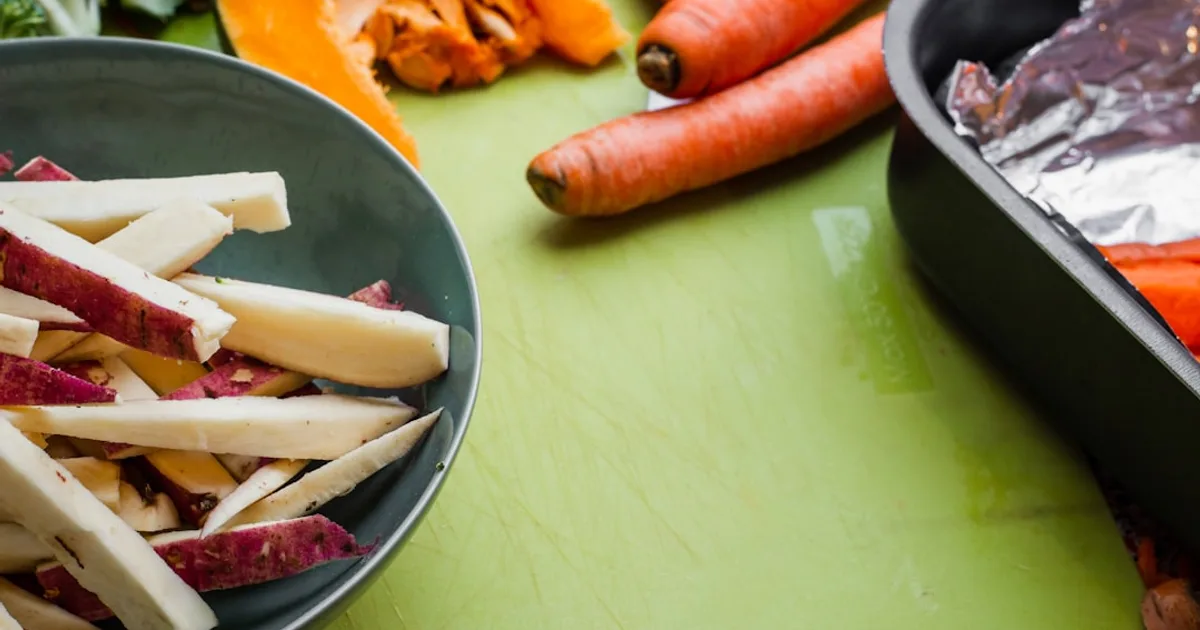
Sheet pan, oven, 425°F. Pick one vegetable — broccoli, sweet potato, Brussels sprouts, zucchini, bell peppers. Toss with olive oil and salt. Roast for 20 to 25 minutes.
That's it. You now have a vegetable for the week.
If you want variety mid-week, keep a bag of frozen vegetables (edamame, peas, corn) in the freezer that you can microwave in two minutes.
Step 4: Make One Sauce
This is the step most beginners skip, and it's the one that makes the biggest difference.
A sauce transforms your plain protein and grain from boring to actually good. And sauces take five minutes.
Four reliable beginner sauces:
Tahini lemon: 3 tablespoons tahini + juice of 1 lemon + 1 grated garlic clove + 2 to 3 tablespoons water. Whisk. Done.
Soy ginger: 2 tablespoons soy sauce + 1 tablespoon sesame oil + 1 tablespoon rice vinegar + 1 teaspoon honey. Done.
Creamy chipotle: 3 tablespoons Greek yogurt or mayo + 1 tablespoon hot sauce or chipotle in adobo + lime juice. Done.
Basic vinaigrette: 3 tablespoons olive oil + 1 tablespoon red wine vinegar + 1 teaspoon Dijon mustard + salt and pepper. Done.
Make two sauces and you have enough variety to get through the week without things feeling repetitive.
Step 5: Assemble, Don't Pre-Make
Here's the biggest mindset shift for beginners: don't pre-assemble your meals.
Instead of building five identical grain bowls and stacking them in the fridge, store your protein, grain, vegetables, and sauces separately. Then combine them at meal time.
This gives you flexibility. On Monday you want a rice bowl with chicken and tahini sauce. On Wednesday you want the same chicken over salad greens with vinaigrette. On Thursday maybe you stuff it in a wrap with the roasted vegetables. Same prep, four different meals.
Pre-assembling works for some things (overnight oats, salads with dressing on the side), but for main meals it leads to soggy, sad lunches by day three.
What a Full Week Looks Like
Here's an example week using this method:
- Protein: Baked chicken thighs
- Grain: Jasmine rice
- Vegetable: Roasted broccoli
- Sauces: Tahini lemon + soy ginger
- Extras: Sliced cucumber, cherry tomatoes, hard-boiled eggs
From that prep, you can make:
- Rice bowl with chicken, broccoli, tahini sauce (Monday)
- Chicken and rice stir-fry style with soy ginger (Tuesday)
- Chicken salad with cucumber and tomatoes (Wednesday)
- Rice and egg bowl with soy sauce (Thursday)
- Chicken wrap with roasted broccoli (Friday)
Five different-feeling meals from one prep session.
How Long This Takes
For a beginner, this five-step prep takes about 60 to 90 minutes the first few times. By the third or fourth week, you'll do it in 45 to 60 minutes because you stop second-guessing and just execute.
Compare that to figuring out what to eat every day, making last-minute grocery runs, and spending 15 to 20 dollars on lunch every workday. The math strongly favors the 60 minutes of prep.
Where to Buy
Shop meal prep containers on Amazon
